
The French Riviera with kids: beaches, pushchairs and what works by age
Nice's beaches are pebble, not sand — and that is only the first surprise. Where the real sand is, where to base a family, what works with a pushchair and what does not, what succeeds at each age, and why your child will be starving at five.
The question parents ask too late
On paper the French Riviera is the perfect family holiday: warm sea, short flight, safe cities, simple food. In practice, families trip over the same three things — the pebbles, the stairs and the rhythm of French meals. None of them is a reason to stay away. All three are solvable, but only if you know about them first.
This guide covers the coast as a whole, from Nice east to Menton and west to Cannes. For the principality on its own we already have Monaco with kids — a day in Monaco deserves to be planned as its own excursion, with its own programme.
Where the sand actually is
First shock: Nice's beaches have no sand. They have smooth stones, anywhere from egg-sized to fist-sized. Adults adapt in two days. Small children do not: you cannot build anything, you cannot walk barefoot, and you get into the water across stones that shift underfoot. Why they are like that, and what each stretch of the city is like, is set out in our guide to Nice's beaches.
Real sand does exist, less than half an hour away by train.
- Villefranche-sur-Mer, one stop east — a deep, sheltered bay where the Marinières beach is sand mixed with fine shingle, three minutes from the station. The best family beach near Nice, with no serious runner-up.
- Antibes, westward — La Salis and Le Ponteil are sandy, and La Gravette, tucked into the old town, is a small sheltered cove where the water stays knee-deep for several metres. Indicatively around €5 by train, 2026.
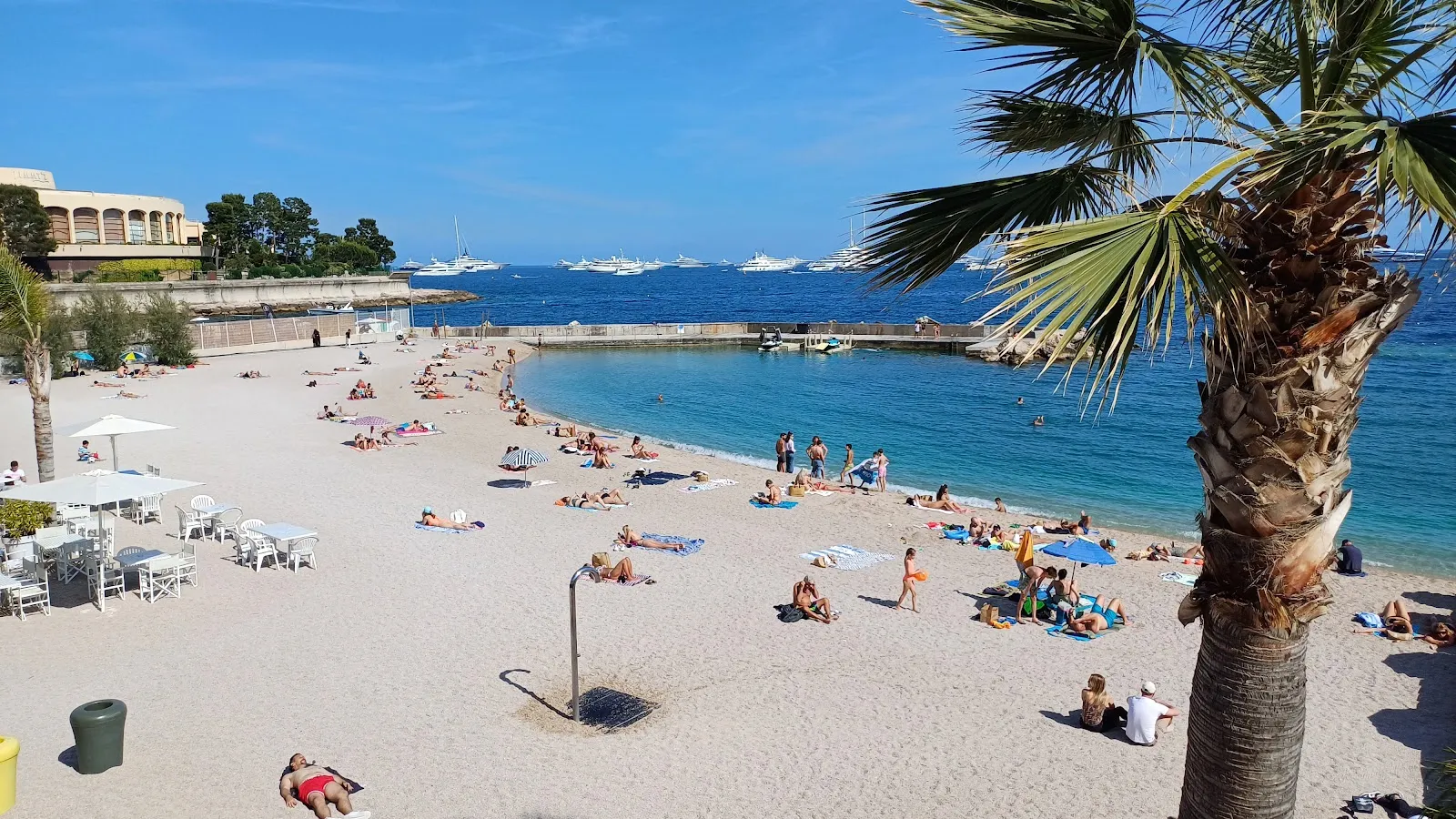
- Larvotto in Monaco — imported sand, a gentle slope, lifeguards, free public sections. If the Monaco day is on the list anyway, pack swimming things.
- Pampelonne, near Saint-Tropez — fine sand for kilometres, and four hours of travelling from Nice and back. Not worth it on a short trip.
If you stay on the pebbles — and you will for at least a day, because Nice is where you sleep: water shoes for the whole family (every shop along the Promenade sells them, indicatively €10–15), a thick mat rather than a towel, and an umbrella. The stones get genuinely hot by midday, and children only notice when it is too late. The compensation is real: the water stays clear because nothing gets stirred up, and you carry no sand back to the room.
Where to base the family, and why it matters more than you think
Four criteria, in the order in which they actually weigh.
Quiet. Vieux Nice is charming and it is, after dark, a bar district. A ground-floor or first-floor flat on an old-town street means noise until one or two in the morning in summer. With a child who sleeps at nine, that ruins the holiday.
A lift. Nice's older buildings run to four and five floors and plenty of them have none. With a pushchair, luggage and a child on one arm, it is the most brutal difference in the whole trip. Ask explicitly, in writing, before you book — the word is ascenseur.
Walking distance to a tram stop. Under five minutes. With children, ten extra minutes at each end of each outing becomes the reason you stop going out at all.
A kitchen. Breakfast at home, and a simple supper for children too tired for a restaurant, changes the arithmetic of the whole day. For a family, an apartment beats a hotel almost every time.
The neighbourhoods that tick all four: the Jean Médecin area, Libération (a real market, lower prices) and the streets just back from the Promenade. The full comparison is in where to stay in Nice, neighbourhood by neighbourhood, and a separate page gathers places to stay along the coast.
With a pushchair: what works and what does not
The tram works. Lines 1 and 2 are low-floor and step-free, and the platforms are level. A single trip is €1.70, valid 74 minutes including connections; a day pass is €7. Small children travel free.
The regional train mostly works. The big stations — Nice-Ville, Monaco, Menton, Cannes — have lifts or ramps. The trouble comes from the small halts along the line: underpasses with stairs, narrow platforms, and a gap between platform and carriage that means lifting. With a folding pushchair and two free hands it is perfectly doable. The mechanics of the line are explained in the Riviera by train.
The Promenade des Anglais is perfect — flat, wide, endless, and the right place for a rented bike, a scooter or a pair of skates.
Èze does not work. The medieval village sits high on its rock, and the inside of it is nothing but steps and cobbles. With a pushchair it is impossible; with a child in a carrier it is wonderful. The Nietzsche path, from sea level upwards, takes an hour of serious climbing — not for small children, in any weather.
Vieux Nice is borderline. Uneven paving, but flat. Small wheels rattle and catch; big ones go through without argument.
What actually works, by age
Up to three. Less, but better. The Promenade du Paillon, the park that cuts through the centre of town with its water mirror and the jets that come up out of the paving, is the best free thing Nice offers small children: they will stay two hours. The Jardin Albert 1er, with its carousel. The bay at Villefranche. Parc Phoenix, out towards the airport, with a big glasshouse, birds and playgrounds (indicatively around €10 for an adult, 2026). One outing a day, with the nap in the pushchair.
Four to seven. For this age band the Oceanographic Museum in Monaco is the safest investment on the coast: large tanks, a shark lagoon, a touch pool. The free lift up to the Colline du Château in Nice spares them the stairs and delivers the best view in the city. The boat to the Lérins islands from Cannes: a quarter of an hour across, then pine woods, a fort and coves you can swim in.
About the marine park near Antibes, the one parents remember from their own childhoods: its status has changed in recent years, against the background of French legislation on dolphin and orca shows. Do not build a whole day around it without checking, in the very week you travel, whether it is open and what can be seen. The options above, by contrast, are stable.
Eight to twelve. This is where the coast opens up. Boat trips, the old town with a map in hand, the changing of the guard at the palace in Monaco, the Formula 1 circuit walked on foot, the Lérins islands, a bike along the Promenade.
Teenagers. The beach, Monaco for the windows and the cars, Cannes, paddleboards. And one practical note: the Monte-Carlo casino does not admit minors, not even into the entrance hall. It is not an item on the programme.
Gardens work from about five upwards and they rescue the too-hot days: Villa Ephrussi at Cap Ferrat, the gardens of Menton, the parks on the Cimiez hill in Nice.
Meals, and why your child will be starving at five
The French rhythm is inflexible and it is the first source of meltdowns: lunch is served between twelve and two, dinner from seven or half past onwards. Between half two and seven, the kitchens are closed. Come off the beach at half five with two hungry children and you will find cafés, crêpes and the big boulevard brasseries — and about that much else.
The solution is local and cheap: socca — the hot chickpea pancake, eaten with your fingers, a few euros —, pan-bagnat, the Niçois sandwich in a round bun, and pissaladière. All three come from a stall and get eaten on a bench. A pass through the Cours Saleya in the morning, plus a boulangerie, solves lunch for the whole family. Where it is worth sitting down properly is in our guide to eating in Nice.
Two details that help: high chairs are almost universal, but a menu enfant exists only in brasseries and pizzerias — in good bistros you order a starter as a main course. And a carafe of tap water is free, and is asked for by name: une carafe d'eau.
Heat, shade and the sea temperature, in plain terms
The sea warms late. In May it is still cold for children — somewhere around 17–18°C: you can get in, you will not stay in. By late June it becomes pleasant, around 21–22. It is at its warmest from August into early September, 24–26, swimming-pool water. The whole of September stays excellent: the water still holds 22–23, the air has eased, the beaches have emptied. In October the sea is still mild, but the days are short.
The air, in July and August, sits at 27–30 with humidity, and Nice's beaches have no natural shade at all — not one tree. An umbrella, rented or brought, is not optional, and the hours from eleven to four are spent in shade or indoors. The best months for families are June and September, in that order, and the full reasoning is in when to visit the French Riviera.
What to skip, with no regrets
- Saint-Tropez, on a family holiday without a car. Four hours of travelling for a harbour.
- Èze village with a pushchair. See above.
- Grasse and the perfume factories with children under ten. A tour about smells, in a warm building.
- A whole day at a beach club. Indicatively €30–60 for a lounger plus the meal — and your child will be exactly as happy on a free public beach.
- A hire car, unless you are heading inland. Parking in Nice and in Monaco is expensive and awkward; the train and the tram do everything.
What is left, once all of that is cut, is precisely what works: a base in Nice, three or four short train days, warm water, and children who sleep well because you did not drag them through five towns.
Plan your trip
Hotels nearby
Hotels in Nice
Experiences
Tours & activities
Private tours, boat trips and hand-picked experiences via GetYourGuide — free cancellation on most.
See all experiences