
The French Riviera in 7 Days: A Realistic Itinerary from Nice, by Train
Seven days with one hotel in Nice and no car: Vieux Nice and the castle hill, Monaco, Villefranche, Èze with Menton, Cannes and the Lérins islands, plus a slow day. Every day with its travel leg, fare, timing and one honest warning — and how to compress it to five days or stretch it to ten.
The logic of this itinerary
Seven days on the French Riviera, one hotel in Nice, no car, everything by regional train and tram. This isn't a budget compromise — it's the best option available. The coast between Cannes and Menton is served by a railway that runs metres from the sea, with stations five to ten minutes' walk from the old centres, and it spares you the one genuinely unpleasant experience the region offers: driving and parking on the Riviera in season. Why Nice is the right base rather than Monaco or Cannes is set out separately in the guide to Nice as a base; how the line works end to end is in the Riviera by train.
Two construction principles, which you'll recognise in every day below. First: one day, one idea. Not three towns in an afternoon. The second day of a holiday spent running for a train is the day you lose the holiday. Second: the hard part in the morning, the soft part in the evening. Anything that involves climbing, tickets or fixed hours happens before one o'clock; anything that only requires sitting in a chair happens after.
The train and city transport fares below were checked in October 2026. Where I give a range, I say so. What all of this costs as a package, across three budget tiers, is in the cost guide.
One thing to do before anything else, once: buy a seven-day Lignes d'Azur pass, €20, in your first hour in Nice. It covers every tram and every urban bus all week. A single trip costs €1.70 and is valid 74 minutes including connections, but with no return; a day pass is €7. With seven days at €20 you stop calculating.
Day 1 — Arrival and getting your bearings in Nice
The leg: from the airport, tram line 2 runs straight into the centre at Jean Médecin and onwards to the port. The "L'Aéro" airport return ticket costs €10; if you already have the seven-day pass, check at the machine whether it covers the airport section, because that fare is handled separately.
The shape of the day: plan nothing. Genuinely. Drop the bags, walk to the sea and do the one thing that orients you instantly on this coast: walk the Promenade des Anglais eastwards until the promenade ends at the old town. Thirty or forty minutes with the sea on your right. At the end, go into Vieux Nice for your first meal and your first socca. You take no trains on the first evening.
Know this immediately: Nice's beaches are pebble, not sand. Round, fist-sized stones. The sea is superb, getting in is uncomfortable, and a thick mat plus a pair of rubber beach shoes, bought on day one, changes your entire week.
The honest warning: if you land after ten in the evening, the tram thins out. It isn't dramatic — but with children, big bags and a hotel that isn't on line 2, a pre-arranged transfer is money well spent rather than a luxury.
Day 2 — Vieux Nice, the market and the hill
The leg: no train at all. On foot and by tram, so free with the pass.
The shape of the day: start at Cours Saleya at nine in the morning, when the flower and produce market is at its peak and still smells of basil rather than tourists. Then walk Vieux Nice without a map — there are about six streets, you can't truly get lost — with a stop for socca eaten standing up, peppered, hot off the copper plate.
Around midday, climb the Colline du Château. There's no castle left up there, just a park of pines, an artificial waterfall and the best view in the city: the port on one side, the bay and the promenade on the other, with the orange roofs between them. There is a lift at the eastern end of the promenade — use it going up and take the steps down, not the other way round.
Afternoon: either the beach, or Cimiez, the hill above the city, with the Matisse Museum, the Marc Chagall Museum and the Roman ruins. Not both.
The honest warning: on Mondays, the Cours Saleya market is an antiques market rather than flowers and produce, and several municipal museums take their closing day. If your first full day falls on a Monday, swap Day 2 with Day 3 and leave Nice for Tuesday.
Day 3 — Monaco, as a day out
The leg: Nice-Ville → Monaco-Monte-Carlo, about €6.10 one way, about 25 minutes. With a Zou! discount card it drops to roughly €4.30; from five travellers, the mini-group fare falls to around €3.10 per person. Buy on the day, at a machine or the counter — there's nothing to book ahead and no fare that climbs.
The shape of the day: Monaco's station is cut into the rock, and its exits lead to different parts of the principality, which surprises everybody; leave towards Fontvieille or Place Sainte-Dévote depending on where you want to start. Go up onto the Rocher in the morning, while it's cool and the queues are short: the Prince's Palace, the changing of the guard, the cathedral, and then the Oceanographic Museum, the one ticket here I recommend without hesitation. Come down for lunch in La Condamine, by the market and the harbour, where you can eat reasonably. Afternoon: Port Hercule, then the slow climb to Place du Casino, the gardens, and the outside of the casino in six o'clock light, which is its moment.
The precise Nice–Monaco logistics — which station exit, the buses, what to do with luggage — are covered in detail in Monaco from Nice, and an hour-by-hour plan written specifically for a single day in the principality is in one day in Monaco. I won't repeat them here.
The honest warning: check the time of the last train back to Nice on the board when you arrive, not at ten at night. Summer evenings are long, but the line doesn't run all night, and a Monaco–Nice taxi at eleven costs many times the ticket. And one more: Monaco is vertical. Public lifts and escalators are numerous and free — find them instead of climbing streets.
Day 4 — Villefranche-sur-Mer and Cap Ferrat
The leg: one stop east of Nice, about 7 minutes by train. It's the cheapest journey of the week: a short-hop regional ticket, indicatively €2–3 one way in 2026 — buy it at the machine and check the exact price there. Beaulieu-sur-Mer is the next stop along.
The shape of the day: this is the week's soft day, and that's deliberate. Villefranche has the deepest natural harbour on this stretch, an ochre old town stepping down to the water, a bay of sand and fine shingle — meaning a beach you can actually lie on — and the Rue Obscure, a covered medieval street, a stone tunnel running under the houses. Morning: the old town and a coffee on the quay. Lunch on a terrace with your feet fifteen metres from the boats. Afternoon: swim.
If you want more, carry on one stop to Beaulieu-sur-Mer and head onto Cap Ferrat — the Villa Ephrussi de Rothschild with its gardens, or the Villa Kérylos, plus the shoreline path around the cape. But if you spend the whole day in Villefranche you've done nothing wrong; the full day there is laid out in the Villefranche-sur-Mer day trip.
The honest warning: on Cap Ferrat, the villas and gardens run seasonal hours, with reduced times or winter closures; check before making the journey. And the shoreline paths have no shade — at midday in August, that's a mistake.
Day 5 — Èze and Menton
The leg: two connections. First, Nice → Èze-sur-Mer, about 15 minutes, ticket indicatively €3–4. Then onwards east; Nice → Menton is about €7.70 one way and about 40 minutes — starting from Èze the remaining leg is shorter and cheaper, but buy at the station machine.
The shape of the day: this holds the itinerary's one serious trap, and it needs saying plainly. The medieval village of Èze is high up on a crag. Èze-sur-Mer station is down at sea level. There is some 400 metres of height between them. You have two options: the bus that climbs from in front of the station, which is the right answer for 95% of people, or the Nietzsche path, a steep trail of roughly an hour of continuous climbing, with no shade, over stones. The path is beautiful and it is an achievement — but it isn't a stroll, it's an effort, and it isn't done in sandals, without water, or at midday in July.
Up top: the village itself, which takes forty minutes, and the Jardin Exotique at the summit, with its cacti and one of the widest views on the coast. Then descend to the station and carry on to Menton for the afternoon: the last French town before Italy, the mildest climate on the coast, an Italianate old town in yellows and pinks, lemons in the courtyards and serious gardens. Dinner in Menton on a terrace, and the train back.
If you'd rather link this day differently — Èze, Monaco and Menton in one circuit — I've written that separately in the Èze–Monaco–Menton day trip.
The honest warning: the bus up to Èze village doesn't run often, and the last descent is earlier than you'd expect. Check the return timetable as you board, not afterwards. And, again, the last train to Nice from Menton — that's a 40-minute journey you don't want to make by taxi.
Day 6 — Cannes and the Lérins islands
The leg: the only day you travel west, the opposite direction from the rest of the week. Nice-Ville → Cannes, roughly 30–40 minutes, ticket indicatively €7–8 one way in 2026. Check at the machine.
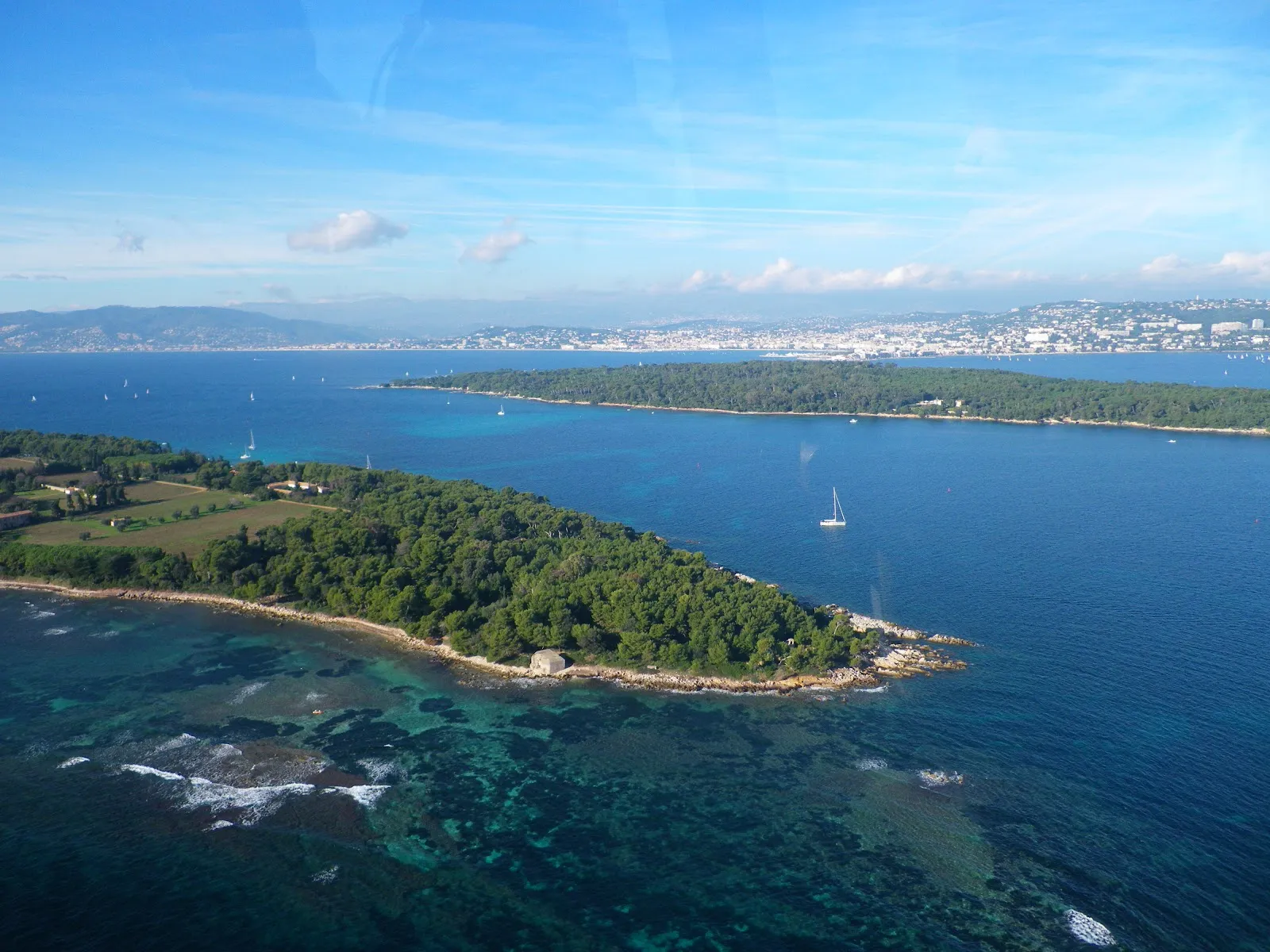
The shape of the day: Cannes divides into three things, and the third is the good one. First: La Croisette and the Palais des Festivals with the handprints in the pavement — a half-hour walk that is, honestly, more interesting in photographs than in person. Second: Le Suquet, the old town hill, with narrow lanes, a tower and the view across the bay — that one earns the climb. Third, and the reason you came: the Lérins islands, fifteen to twenty minutes by ferry from the old port. Sainte-Marguerite has pines, a fortress with the Man in the Iron Mask's cell, and clear-water coves; Saint-Honorat is a working Cistercian monastery with its own vineyard, quiet, with rules of conduct it's only decent to respect.
The schedule that works: old town and harbour in the morning, the eleven o'clock ferry, lunch from what you carried with you, the afternoon on the island, back around six. The ferry ticket is, indicatively, €17–22 return in 2026, depending on island and operator. The full day, with variations, is in the Cannes day trip from Nice.
The honest warning: the ferries have a last departure from the island, and nobody sleeps on them. Memorise that time when you buy the ticket. In winter the ferries run less often, and out of season there's very little to eat on Sainte-Marguerite — bring it with you.
Day 7 — A slow day, on purpose
The leg: none, or one stop.
The shape of the day: you don't add a seventh town. This day is for whatever you discovered you liked in the first six. The Libération market in the morning, which is the market locals actually shop in. A long swim. The museum you kept postponing. The table you saw from the train and promised yourself you'd come back to. If you're buying gifts, Nice sells olive oil, candied fruit, soap and Bellet wine — not magnets.
If your flight is in the evening, leave the bags at the hotel or the station, take tram 2 to the airport an hour and a half earlier than you think you need, and spend the morning on the promenade. Nice Côte d'Azur is France's second-busiest airport; it has two terminals and, at peak, real queues.
The honest warning: on Sunday afternoons many shops and a fair number of the good restaurants in Nice are closed, and the same goes for Monday mornings. If Day 7 falls on a Sunday, build it around the sea and the promenade rather than shopping.
How to compress it to five days
Cut Day 6 and Day 7. What remains: arrival and Nice, Vieux Nice and the hill, Monaco, Villefranche, Èze with Menton. It's a dense itinerary but still breathable, and it contains everything that defines this coast. Cannes and the Lérins are the first thing to drop — not because they're weak, but because they're in the opposite direction and cost you a whole day on a line you don't otherwise use.
With only four days, cut Èze as well: keep Menton as an afternoon attached to something else, or drop it entirely and give the time to Monaco and Villefranche.
How to stretch it to ten days
You don't add towns further away — you add depth and one day with no plan. Three worthwhile additions, in order:
Saint-Paul-de-Vence and Vence, in the hills behind the coast, with the Fondation Maeght and Matisse's chapel. The train doesn't reach here; it's a bus, an organised excursion or a private driver — the only day in ten where a car or a driver justifies itself.
Antibes and Juan-les-Pins, on the line west, with the Picasso Museum in the Château Grimaldi, the walled old town and the largest yacht marina in the Mediterranean. Do it on the way to Cannes or as a day of its own.
A second day in Monaco or Menton, which sounds uninspired and is in fact the best thing you can do: on the second day you stop ticking things off and simply stay.
And if you have ten days, put at least one completely empty day in the middle. Not at the end — in the middle, so it rests you for the rest.
What to drop first, in order
- Cannes and the Lérins — opposite direction, a whole day.
- Cimiez (Matisse, Chagall, the ruins) — excellent, but it's a museum, and this coast is outdoors.
- Cap Ferrat, if you're already in Villefranche — the villas are lovely and expensive in time.
- Èze village, if it's hot or if your knees have opinions.
- The slow day — and here you stop. Don't drop the slow day. It's the only one you'll remember as a holiday rather than as a schedule.
What never gets cut: Vieux Nice with the hill, Monaco, and one sea day in a bay where you can actually lie on the beach.
Three checks before you go
The line. Look at SNCF Connect or TER Sud for your own dates. Engineering works and strikes do cut the Marseille–Ventimiglia line, sometimes for weeks, and the whole itinerary above assumes it's running. If a section is closed, replacement buses exist, but every timing shifts.
The season. Gardens, villas and ferries run seasonal hours, and crowding changes the rhythm of these days completely. When it's worth coming, month by month, is in the best time to visit the Riviera.
The last train. Every day, every time, the moment you arrive. It's the only rule in this article that costs you money if you ignore it.
Plan your trip
Hotels nearby
Hotels in Nice
Experiences
Tours & activities
Private tours, boat trips and hand-picked experiences via GetYourGuide — free cancellation on most.
See all experiencesGetting to the Riviera
Flights, transfer & car
Nice → Monaco transfer
Private transfer, fixed price, driver waiting — 30 minutes along the coast.