
Nice as a Base for the French Riviera: Why Here, Not Monaco
The airport, the rail line, the lodging stock and the price level are all in Nice — Monaco is a day out from it, not the other way round. The full case, with indicative costs, real train times and an honest list of who should base themselves elsewhere.
The argument in three sentences
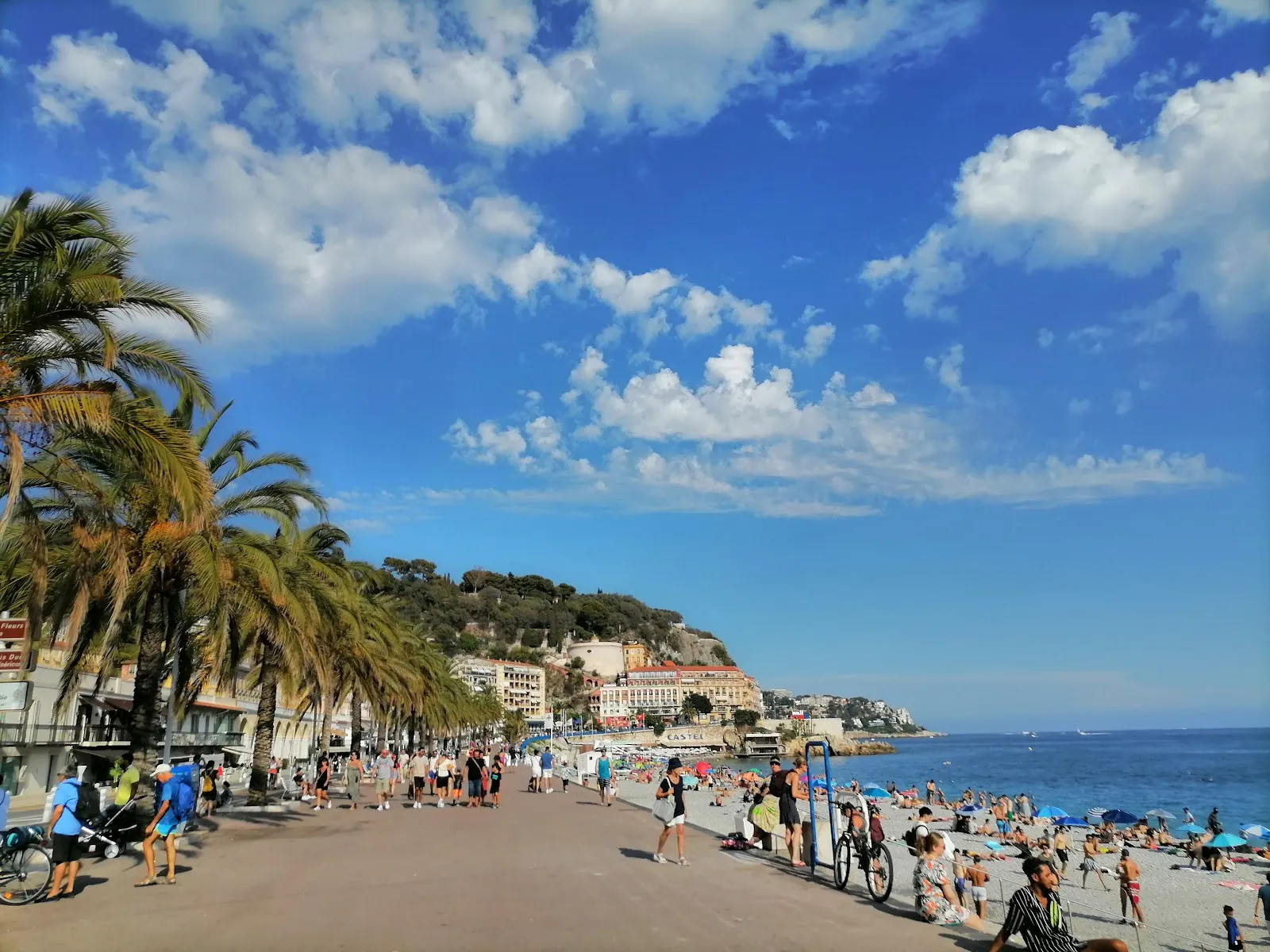
On the French Riviera there is exactly one city where you can land, sleep, eat and board a train for the rest of the coast without ever changing base: Nice. Monaco is spectacular and deserves a full day, but it is a principality of roughly two square kilometres with a small, expensive lodging stock built for something entirely other than a week's holiday. Nice has the international airport, the station on the coastal rail line, a tram, neighbourhood markets, public beaches, serious museums and hotels at every price level — which is why the base belongs here, and why Monaco becomes what it actually is for almost every visitor: a day out.
If you are still weighing the two cities directly, that comparison lives in Monaco or Nice. This article assumes you are past the "where" question and gives you the concrete case: numbers, distances, train times and — just as importantly — the limits of the decision. For the exact mechanics of the day in the principality, from which train to take to what to do when you arrive, Monaco from Nice goes into the detail this piece deliberately stops short of.
Why Nice rather than Monaco, Cannes or Antibes
The airport. Nice Côte d'Azur (NCE) is France's second-busiest airport and the coast's only real air gateway. It has two terminals, 1 and 2, and — the detail that changes everything — tram line 2 leaves from directly outside them for the city centre and on to the port. There is no simpler arrival anywhere on the Riviera: off the plane, onto the tram, into town. Monaco has no airport of its own, and Cannes-Mandelieu serves private aviation, not the flight you will actually be on. What the journey from terminal to hotel really looks like, with fares and with the cases where the tram is the wrong call, is in Nice airport to the city centre.
The train line. Nice sits on the Marseille–Ventimiglia line, which serves the coast west to east like a long metro: Nice-Ville, Nice-Riquier, Villefranche-sur-Mer, Beaulieu-sur-Mer, Èze-sur-Mer, Cap-d'Ail, Monaco-Monte-Carlo, Roquebrune-Cap-Martin, Carnolès, Menton, Menton-Garavan, then Italy. From Nice you reach all of them, in both directions, on tickets bought the same morning. From Monaco you are on the same line, true — but you pay three times as much for your bed for the privilege. How to work the line end to end, discount cards and pitfalls included, is the subject of the French Riviera by train.
The lodging stock. Nice has several hundred hotels and thousands of apartments, from neighbourhood guesthouses to the palace hotels on the Promenade des Anglais. That means two things: you have genuine choice, and — more useful — properties compete with each other, which holds prices down. Monaco has a few dozen units, nearly all at the luxury end, and no pressure whatsoever to discount. Nice's neighbourhoods are not interchangeable, though, and the gap between sleeping in Vieux Nice and sleeping in Fabron is wider than you would guess: see where to stay in Nice, neighbourhood by neighbourhood.
The price level. Nice is a city of 350,000 people who live, work and eat there all year. There are neighbourhood cafés, markets, bakeries, fixed-price lunch menus. Monaco is a tax jurisdiction of 38,000 residents built around a clientele that does not read the bill. That is not a complaint — it is an observation that shows up directly in your budget.
The city works out of season. In November, Cannes is half shut and Saint-Tropez entirely so. Nice is not: it has a university, an opera house, hospitals, a shopping centre, actual neighbourhood life. If you come outside summer — often the best decision on this coast — Nice is the one place where you do not feel like you are walking around a film set after the crew has left.
What a day costs here versus a day in Monaco
The figures below are indicative ranges for 2026, not guaranteed rates; they are here for the ratio, not for accounting precision. For spending across the whole coast, in every category, the dedicated guide is what the French Riviera costs.
A moderate day in Nice: a double room in a three-star hotel outside peak season, somewhere in the 90–160 € range; coffee and a croissant at a neighbourhood café, 4–7 €; a portion of socca at the market and a pan-bagnat, a few euros each; a fixed-price lunch, 18–28 € a head; an honest dinner at a bistro in Vieux Nice, 30–45 € a head before you get generous with the wine; public transport, 7 € for a day pass or 1.70 € a trip. In short: a couple who skip nothing essential but are not chasing ostentation sit comfortably inside a low three-figure daily budget.
The same day in Monaco: that same hotel does not exist — the entry threshold for a bed is substantially higher, and dinner somewhere comparable to that Vieux Nice bistro typically runs 40–60% more. Coffee on a Monte-Carlo terrace is a different sport from coffee standing at a bar in Nice. None of this is a reason to skip the principality; it is a reason to visit it while sleeping elsewhere. If you want the detailed numbers for Monaco itself, they are in the Monaco daily budget.
The real difference is not the coffee or the dinner. It is the bed, multiplied by the number of nights. The entire argument comes from there.
How far everything actually is
This is where Nice stops being merely convenient and becomes a base. The fares and times below are for the regional TER / Zou! train, checked in October 2026, one way.
- Nice → Monaco-Monte-Carlo: about €6.10, roughly 25 minutes. Less than many people spend commuting into their own city centre.
- Nice → Menton: about €7.70, roughly 40 minutes. The last French town before Italy, with the mildest climate on the coast, citrus gardens and a February Lemon Festival.
- Villefranche-sur-Mer: one stop east. A deep natural harbour, an old town with the Rue Obscure, a sand-and-shingle bay, cruise ships at anchor. The best half-day in this whole cluster — details in the Villefranche-sur-Mer day trip.
- Cannes: west, the opposite direction from Monaco, on the same line. La Croisette, the Palais des Festivals, the old-town hill of Le Suquet and the Lérins islands by ferry; see Cannes as a day trip from Nice.
- Èze: mind the geography. The medieval village sits high on its rock; the station, Èze-sur-Mer, is at sea level. Either take the bus up or climb the Nietzsche path — roughly an hour, genuinely demanding, not with luggage and not at midday in August.
Two cheap instruments change the arithmetic if you make more than one excursion: a Zou! discount card brings Nice–Monaco down to roughly €4.30, and the mini-group fare reaches about €3.10 per person from five travellers upward. Buy at station machines, at the counter, or on SNCF Connect, on the day — no advance booking needed.
One warning no guide states loudly enough: this line closes. Engineering works and strikes cut it periodically, sometimes for weeks. Check SNCF Connect or TER Sud for your own dates before you build an entire day around a train.
Who should NOT base themselves in Nice
This is the part most articles skip, even though it is the part that saves a holiday.
Anyone who wants sand. Nice's beaches are pebble — not fine shingle, but smooth stones the size of a small fist. The water is superb, getting in is uncomfortable, and a lounger or a thick mat is not a luxury but a necessity. If your idea of a holiday is a towel on sand, you will be disappointed, and the disappointment will last as long as the trip. There are workarounds — nearby bays, equipped beaches, better choices by time of day — and they are in the Nice beaches guide.
Anyone who wants complete quiet. Nice is a city, with scooters, bin lorries at five in the morning and terraces full until late in Vieux Nice. If noise ruins your sleep, either pick a calmer neighbourhood or base yourself in Villefranche or Beaulieu and pay for it with fewer dinner options.
Anyone coming for Saint-Tropez. Saint-Tropez has no railway station, sits well to the west, and the drive in season is an exercise in patience. If Saint-Tropez is the point of the trip, Nice is the wrong base — stay in the gulf and come this way once, if at all.
Anyone who holidays inside a resort. If the plan is a pool, a spa and no journeys, an isolated resort will serve you better than an urban hotel. Nice rewards people who leave the building.
How many days
Four nights is the sensible minimum: one day finding your feet in the city, one in Monaco, one towards Villefranche or Èze, one spare for the beach, the museums or Cannes.
Seven nights is the ideal shape and the one the coast seems designed for: Monaco, Menton, Villefranche, Cannes, two full days in Nice and a reserve day for bad weather. If you want the skeleton already built, it is in the 7-day French Riviera itinerary.
Beyond ten nights, splitting the stay starts to pay: five nights in Nice and five in Menton or Antibes changes the feel of the trip entirely without lengthening a single journey.
Under three nights, honestly, do not leave Nice — and that is fine. The city alone carries three days without effort.
Your first day: an hour of orientation that saves the rest of the trip
Do not start with museums. Start with the geography.
Take the tram or walk into Vieux Nice and cross it diagonally to Cours Saleya, the city's flower and produce market, with antiques on Mondays. Buy nothing yet; just look. From there climb the Colline du Château — there is a lift, and fewer steps than you fear. From the top you see, in a single sweep, the port to your left, the curve of the Promenade des Anglais to your right and the hills behind. Five minutes up there teaches you the city better than any map. There is no castle left; the park and the view are the actual reason to go.
Come down onto the Promenade, get in the water if the season allows, then eat a socca standing up and have a glass somewhere on a side street. A first day needs no more planning than that. The rest — the Matisse and Chagall museums up in Cimiez, the Roman ruins, the galleries — belongs to the days after, and the orderly version is in the best things to do in Nice. For eating, from socca and pissaladière to the tables worth booking, the guide is where to eat in Nice.
What to book ahead and what to leave alone
Book ahead: your room, especially between June and September and during the Monaco Grand Prix, when the entire Nice–Menton corridor fills and prices jump; and an airport transfer if you land at night, are four people with luggage, or have a hotel far from a tram stop. The properties we stand behind are in where to stay, with the top end in luxury hotels.
Do not book ahead: regional train tickets (bought on the day; they do not get cheaper in advance), lunch restaurants, the beach. Flexibility is worth more on this coast than any plan made at home — the weather, and especially the sea, change their mind within hours.
And if the day in the principality runs late, with a bag to carry or a flight to catch, a private Nice–Monaco transfer covers exactly the window in which the train stops helping.
Plan your trip
Hotels nearby
Hotels in Nice
Experiences
Tours & activities
Private tours, boat trips and hand-picked experiences via GetYourGuide — free cancellation on most.
See all experiencesGetting to the Riviera
Flights, transfer & car
Nice → Monaco transfer
Private transfer, fixed price, driver waiting — 30 minutes along the coast.