
Menton as a Day Trip from Nice: Gardens, the Old Town and the Italian Border
The last French town before Italy has the mildest climate on the coast — hence the gardens, the lemons and the February festival. How to get there in 40 minutes for €7.70, what to see, why to check opening hours first, and why Menton deserves a whole day rather than a stop.
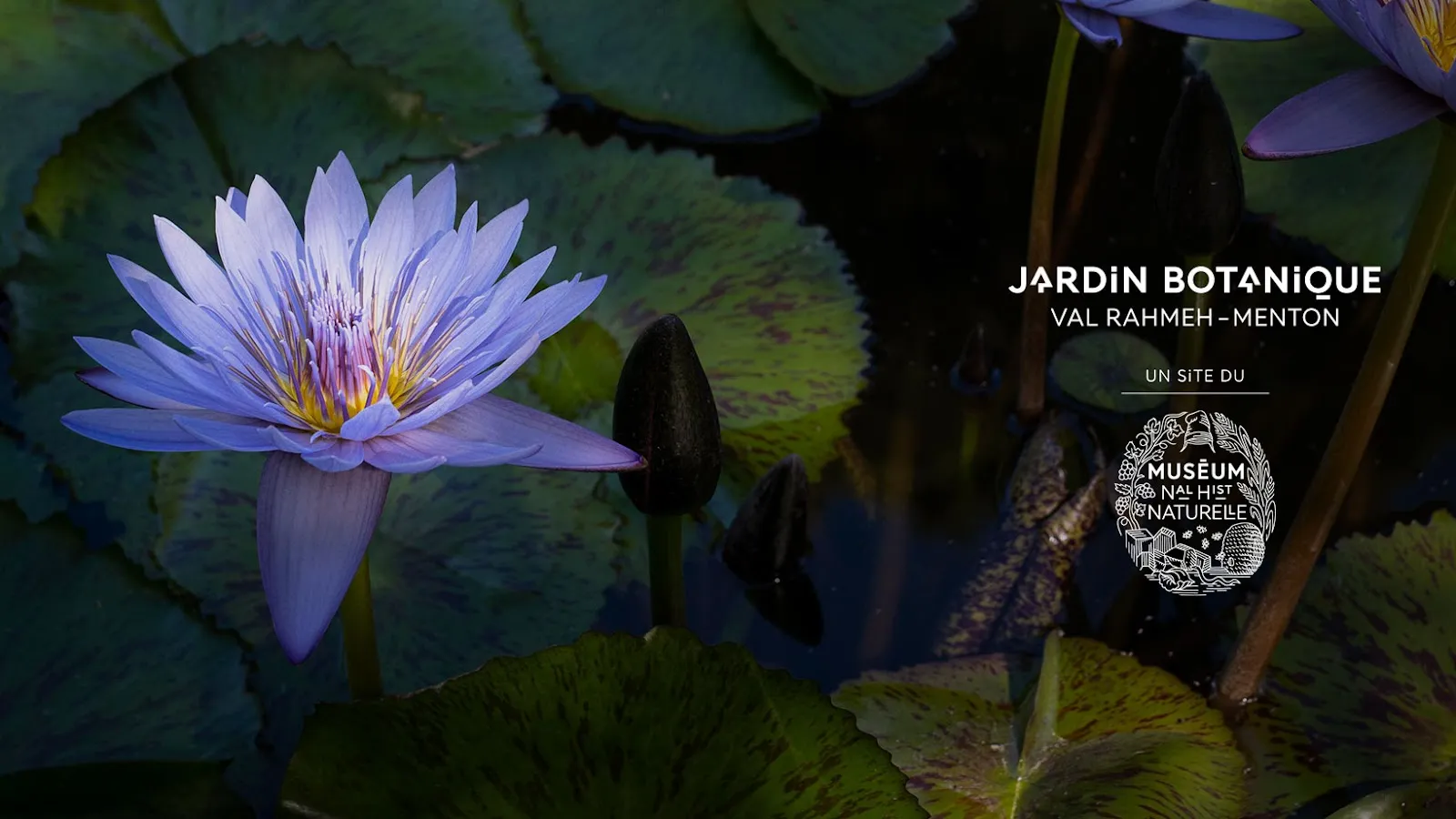
The last French town before Italy
Menton is not the tail end of a day spent sprinting through three towns. It is where the French Riviera stops — the last station before Ventimiglia — and the only town on this coast with its own climatic reason for looking the way it does.
The mountains come almost down to the water here and block the cold northerly wind; the bay faces south-east and takes the morning sun; the winters are the mildest on the whole coast. That is why lemons ripen outdoors in Menton, why there are gardens full of plants that live in glasshouses everywhere else in France, and why the town holds a botanical heritage that Nice, Cannes and Monaco simply do not have. Everything about Menton — the gardens, the festival, even the colour of the façades — follows from the fact that it does not freeze here.
The trade-off belongs in the first third of this article rather than buried at the end: Menton is the furthest of the easy day trips from Nice, and out of season it is a quiet town with an elderly population and half its terraces empty. If you want buzz, do not board the Menton train in November. If you want gardens, good light and an old town that climbs in flights of steps above the sea, it is the best reason to head east.
Forty minutes and €7.70
Nice-Ville → Menton costs roughly €7.70 one way and takes about 40 minutes on the regional train (TER / Zou!), on the Marseille–Ventimiglia coastal line. Nothing needs booking: buy at a machine, at a counter, or on SNCF Connect, on the day. With a Zou! discount card, or the mini-group fare — around €3.10 per person from five travellers — the price drops considerably.
The train calls, west to east, at Nice-Riquier, Villefranche-sur-Mer, Beaulieu-sur-Mer, Èze-sur-Mer, Cap-d'Ail, Monaco-Monte-Carlo, Roquebrune-Cap-Martin, Carnolès, Menton, Menton-Garavan and finally Ventimiglia. The full mechanics — tickets, cards, how to read a timetable, what to do when the line is cut — are in our guide to the Riviera by train. Here, two things are enough.
First: check your date on SNCF Connect or TER Sud before you set out. Engineering works and strikes periodically cut this line, sometimes for weeks, and Menton sits at the exposed end of it. Second, and this is the practical tip that changes the day: for the gardens in the Garavan quarter, stay on one stop longer and get off at Menton-Garavan. It is far closer to them than the main station and saves you twenty minutes of walking uphill on tarmac.
Why the gardens are the main subject
From the late nineteenth century the microclimate drew a colony of wealthy English, Russian and American residents who wintered in Menton and made gardens. Some had money; a few had serious botanical obsessions. The result is a concentration of historic gardens along a few kilometres of hillside that exists nowhere else on the coast.
Jardin botanique exotique du Val Rahmeh is the garden in the photograph above: a nineteenth-century villa with terraces and pools, and a collection now run by the National Museum of Natural History in Paris. Citrus, palms, bananas, subtropical plants you would otherwise only meet under glass — and a specimen of Sophora toromiro, the tree extinct in the wild on Easter Island. It takes about an hour, and it is probably the best hour of the day.
Serre de la Madone, on the slope above, is Lawrence Johnston's garden — the Englishman who made Hidcote in the Cotswolds. It is a different proposition altogether: terraces, stone stairs, basins, deep shade, an architect's composition rather than a botanist's collection. Walking up from the station is a real climb in the heat; a taxi to the gate costs little and saves a lot.
There is also Maria Serena, near the border; Fontana Rosa, the garden of the Spanish novelist Vicente Blasco Ibáñez, with its ceramics and literary conceits; and the citrus orchard at Palais Carnolès, once the winter palace of the princes of Monaco, now the town's art museum, holding one of the richest collections of citrus varieties in Europe.
And here is the warning that matters more than anything else in this article: these gardens keep short, seasonal and mutually inconsistent hours. Some open only a few days a week, some only by guided visit at fixed times, some close entirely in winter or on the day after a storm. Do not build your day on opening hours read on a blog — including this one. Check the official sites the day before, and order the gardens to suit yourself once you know what is actually open.
The old town, and the staircase up to the basilica
Old Menton is a block of ochre and pink houses packed onto a spur of hill, with lanes so narrow they stay in shade at noon. You climb it by the rampes Saint-Michel, a monumental, gently graded staircase that delivers you straight into a small square paved with beach-pebble mosaic, the Grimaldi arms set into the middle of it — Menton belonged to Monaco for centuries, and the architecture tells you so more clearly than any museum panel.
At the top stands the Basilique Saint-Michel-Archange, the most convincing baroque church on the coast: an Italian two-tier façade, a heavy gilded interior, an atmosphere that is neither quite French nor quite Ligurian but precisely in between. Beside it, the cream façade of the Pénitents-Blancs chapel. Higher still, the old cemetery on the site of the vanished castle, with headstones in English and Russian — that winter colony again — and the best view in town, free.
On the way down, step into the municipal halles, a Belle Époque brick hall where the valley sells its produce every morning: real Menton lemons, oil, cheese and a slice of tart for lunch on the beach.
Cocteau, the beach, and the Friday-to-Sunday rhythm
Jean Cocteau left concrete traces here. He decorated the wedding room at the town hall — a small, eccentric space you can see during office hours — and fitted out the Bastion on the harbour, a seventeenth-century fort, as a setting for his own work. The town also has a modern museum built around the Séverin Wunderman collection. An honest warning: Menton's Cocteau sites have been through closures and repairs following flood damage, and their status has changed more than once in recent years. Check what is open before you make it the main reason for the trip.
The beach is a pleasant surprise if you come from Nice: at Sablettes, next to the old town, the shore is a mix of fine shingle and sand, kinder underfoot than the big Niçois pebbles, the bay is sheltered, and a swim in April is already plausible.
As for rhythm: this town lives from Friday to Sunday. On Friday morning half of Menton crosses the border to the Ventimiglia market; on Saturday and Sunday the market hall, the cafés and the promenade are full; on Monday and Tuesday several museums and gardens are closed and the place is very quiet indeed. If you have one free day and can choose, choose the weekend.
The Fête du Citron, in February
Around Carnival, for roughly two weeks, Menton puts its identity on public display: the floats along the Promenade du Soleil and the monumental sculptures in the Jardins Biovès are clad in tonnes of lemons and oranges, pinned on one fruit at a time. It is knowingly kitsch, genuinely spectacular and entirely local — nothing else on the Riviera is like it.
What it does to the town, practically, is fill it. Hotels book out months ahead, prices rise, the afternoon trains are packed, and the garden exhibition and the parades are ticketed — so plan properly and leave Nice early. If you hate crowds, February is the one month of the year when Menton is not quiet. How the coast behaves month by month is set out in our guide to the best time to visit the French Riviera.
One step into Italy: the Ventimiglia market
Menton is ten minutes by train from Italy, and on Friday mornings there is an excellent reason to go: the Ventimiglia market, spread along the quays and the central streets, selling fabric, shoes, cheese, vegetables and a level of noise that is not remotely French. Take your ID card or passport, though checks are rare; the currency is still the euro. Two unglamorous precautions: markets like this are classic pickpocket ground, and the ten-euro "designer" goods are counterfeit — don't buy them.
If it is not Friday, cross anyway for an Italian lunch at roughly half the French-side price; and the Hanbury botanical gardens, just past the border, are a natural continuation of a day about gardens.
How long to give it, and how it fits the rest
A full day, not a half. Leave Nice around nine, one garden in the morning, the market hall and lunch, the old town and the basilica in the afternoon, the train back at six or seven. If you want two gardens, drop the beach.
The quick version — Menton in an afternoon, bolted onto Èze and Monaco — exists and is documented separately, in our combined Èze–Monaco–Menton day. It is a decent plan for someone with four days on the Riviera who wants to tick boxes. But it is exactly the sort of day in which Menton becomes "the last stop, at sunset, when everything has closed". If the gardens are what draws you, don't put the town at the end of a race.
If you want to stay the night — and for the Fête du Citron it is genuinely worth it — the town has fewer options than Nice and the good ones sell out; our selection of luxury hotels in the area covers the eastern coast too, including Roquebrune and Cap Martin, a few minutes away by train. Everything else about the town, including what is open now, sits on our Menton page.
And if Menton strikes you as too quiet and you want the opposite end of the spectrum — a medieval village suspended above the sea, photogenic and crowded at midday — read our guide to Èze, and do the two on separate days rather than the same one.
Plan your trip
Experiences
Tours & activities
Private tours, boat trips and hand-picked experiences via GetYourGuide — free cancellation on most.
See all experiencesGetting to the Riviera
Flights, transfer & car
Nice → Monaco transfer
Private transfer, fixed price, driver waiting — 30 minutes along the coast.