Key facts
- Official name
- Principality of Monaco
- Area
- ≈ 2.08 km²
- Population
- ≈ 38,000
- Language
- French (official)
- Currency
- Euro (€)
- Head of State
- Prince Albert II
- Patron saint
- Sainte Dévote
- Time zone
- CET (UTC+1)
Monaco is a sovereign city-state on the Mediterranean, wedged between the foothills of the Maritime Alps and the sea, and surrounded on its landward sides by France. At roughly 2.08 square kilometres it is the second-smallest country in the world after the Vatican — small enough to cross on foot in under an hour, yet home to one of the most concentrated displays of wealth, glamour and natural beauty anywhere on earth.
A country you can walk across
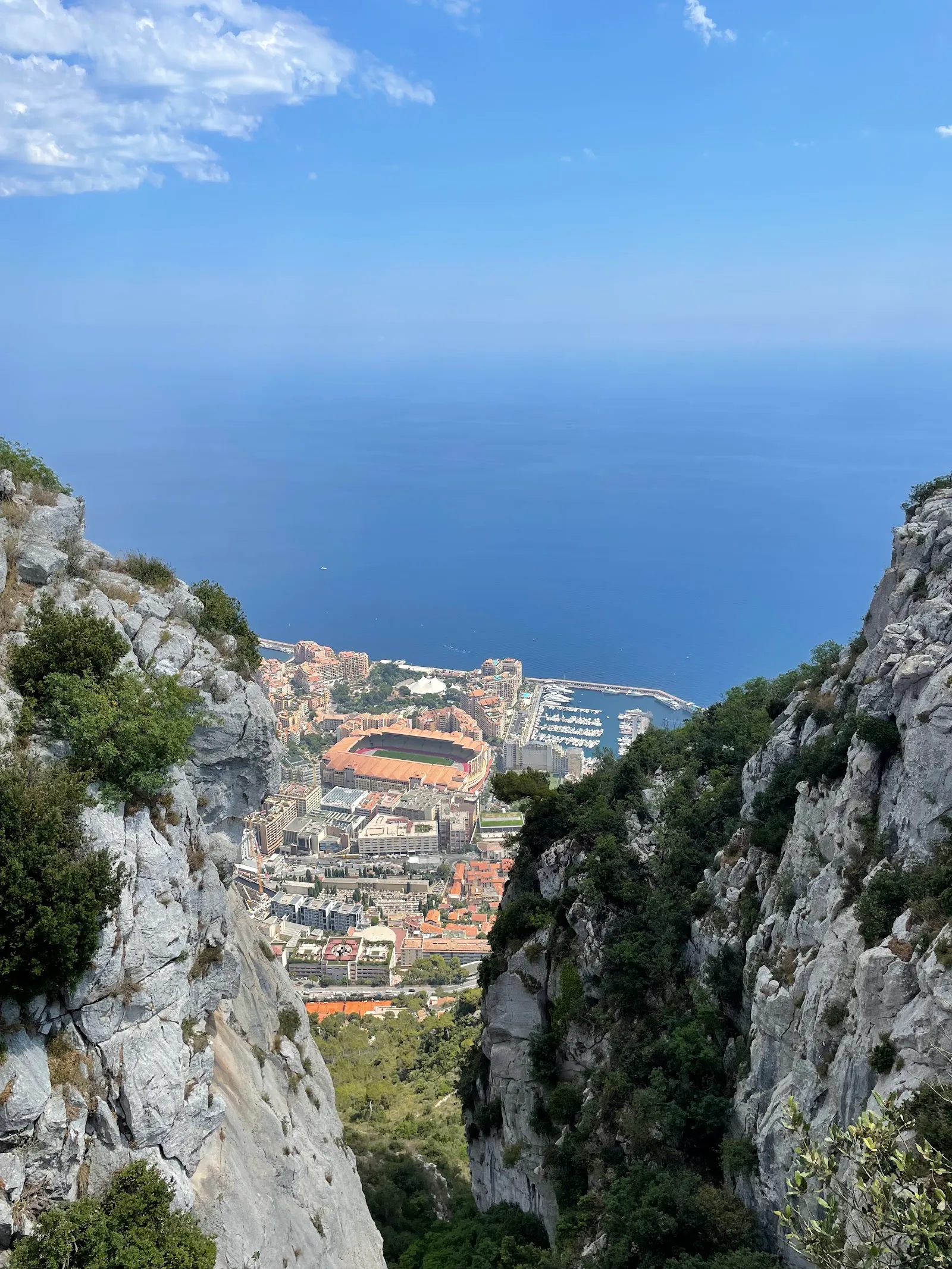
The whole principality stretches barely three kilometres along the coast. Because it climbs so steeply from the harbour to the cliffs, Monaco is also one of the most vertical places you will visit: a free public network of lifts and escalators stitches the levels together, so the gradient rarely matters. What looks like a single glittering city is in fact a cluster of distinct quarters — the medieval Rock of Monaco-Ville, glamorous Monte-Carlo, the working harbour of La Condamine, the reclaimed district of Fontvieille, and the beaches of Larvotto.
The most densely populated country on earth
With around 38,000 residents packed into those two square kilometres, Monaco is the most densely populated sovereign state in the world. Only a minority — the Monégasques — hold Monaco citizenship; the rest are residents drawn from well over a hundred nationalities, attracted by the climate, the safety and the celebrated fiscal regime. Monaco is not a member of the European Union, but it uses the euro, is part of the Schengen area in practice through its relationship with France, and runs its own institutions, police and postage.
Climate and setting
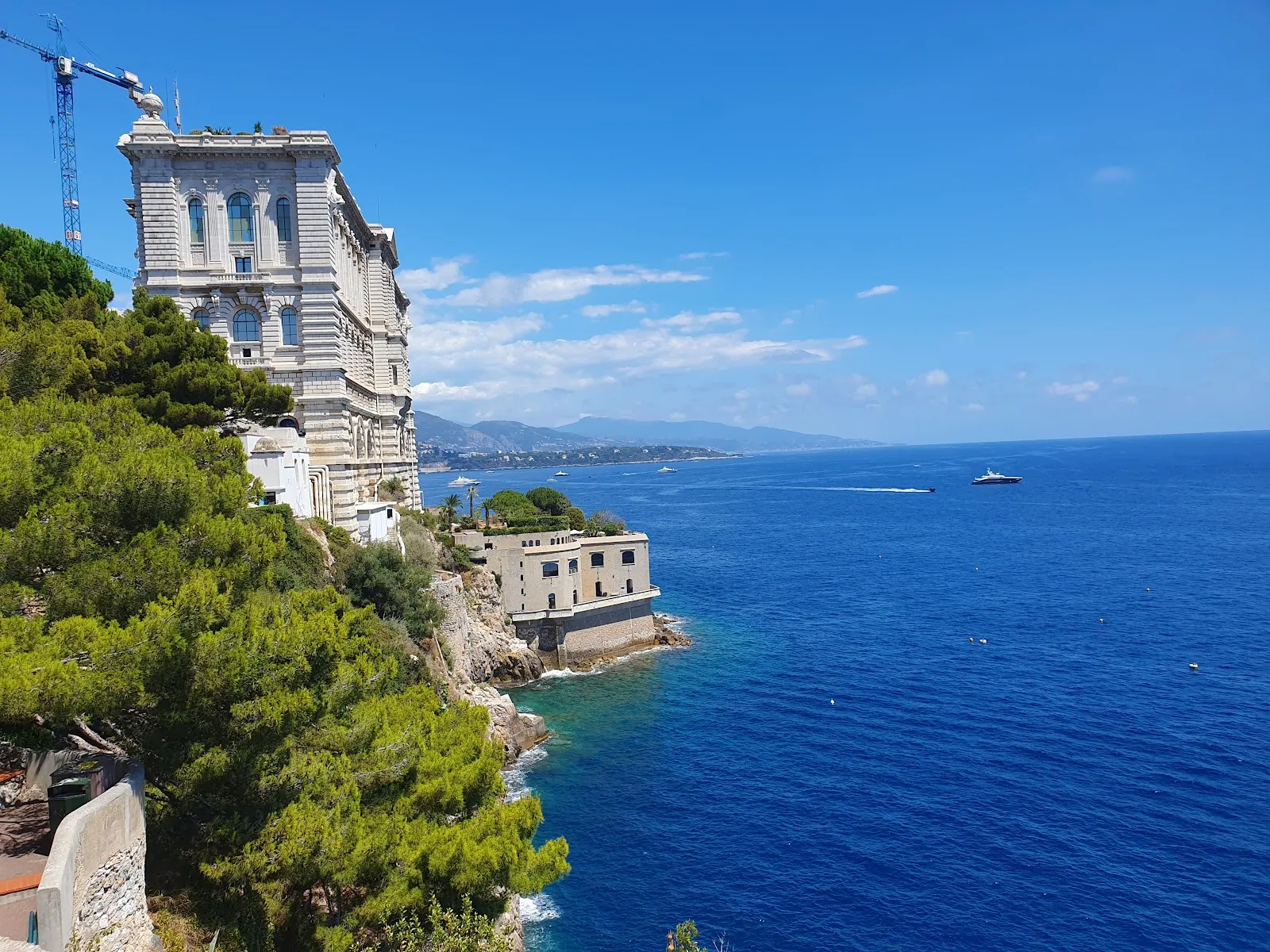
The principality enjoys a gentle Mediterranean climate: hot, dry summers and mild winters, with more than 300 days of sunshine a year. The sea is warm enough to swim from June to October, and the mountains behind rise quickly enough that you can be among Alpine villages within half an hour. This combination — sub-tropical gardens, a sheltered south-facing coast and a dramatic backdrop of grey limestone cliffs — is exactly what drew the first wealthy winter visitors in the nineteenth century, and it still defines the experience today.
A principality, not a tax haven cliché
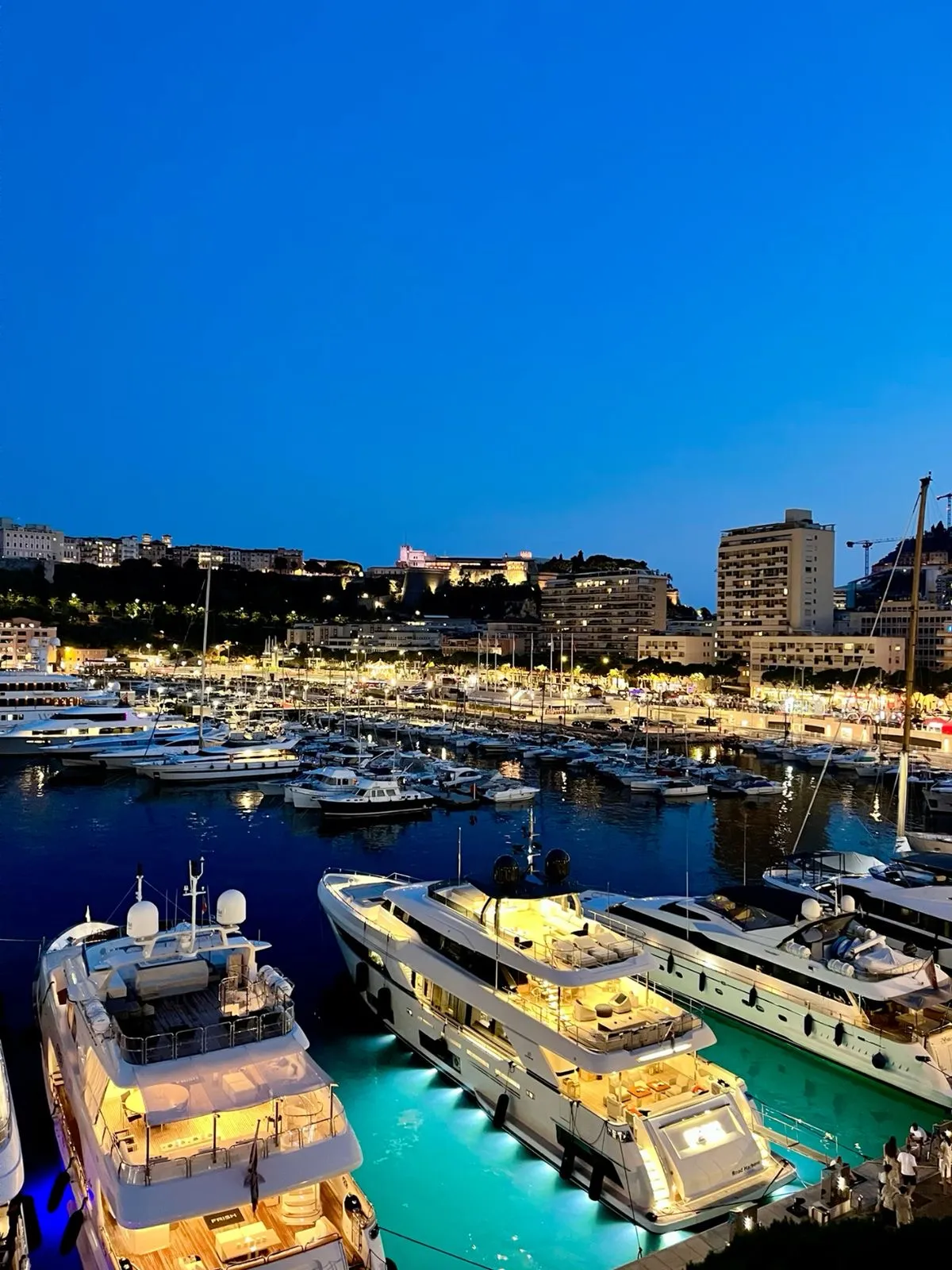
Monaco's image abroad is bound up with superyachts, the Casino and the Formula 1 Grand Prix, and all of that is real. But the principality is also a functioning country with a thousand-year-old ruling family, a constitution, a parliament, museums, a cathedral, an opera house and a deep maritime and scientific heritage. Understanding Monaco means looking past the postcard: at the Grimaldi dynasty that has held the Rock since 1297, at the reinvention of a bankrupt rock into a glittering resort in the 1860s, and at the careful modern balance between exclusivity and openness.
Why people come
Visitors arrive for very different reasons — to watch the Grand Prix, to gamble or simply admire the Belle Époque Casino, to berth a yacht, to dine at the tables of Ducasse and Robuchon, or to use Monaco as an elegant base for exploring the wider French Riviera. Whatever the motive, the principality rewards curiosity: behind the glamour is a genuinely distinctive country.
The name, the flag and the symbols
Monaco's red-and-white flag is one of the oldest national designs still in use, its two horizontal bands taken from the heraldic colours of the Grimaldi — so close to Indonesia's flag that the two are near-identical, differing only in proportion. The country's name most likely descends from the ancient Greek Monoikos, linked to a cult of "Hercules the solitary", and the lozenge-patterned Grimaldi arms, flanked by two sword-bearing monks, recall the family's legendary capture of the Rock in 1297. The princely motto, Deo Juvante — "with God's help" — still crowns the coat of arms.
Citizens and residents
Of Monaco's roughly 38,000 residents, only around 9,000 are Monégasque citizens; the rest are foreign nationals, with the French, Italians and British among the largest communities. Citizenship is rare and hard to obtain, but residency is the real draw: with proof of accommodation and sufficient means, foreign nationals can apply for a residence card and gain access to the principality's security, services and benign tax environment. This is the engine of Monaco's cosmopolitan, multilingual character — a few thousand locals hosting a permanent international elite drawn from more than 130 nationalities.
Getting your bearings
First-time visitors are struck by how compact and vertical Monaco is. The harbour (Port Hercule) sits at the centre; the medieval Rock (Monaco-Ville) rises to its south-west, Monte-Carlo to its north-east, with Fontvieille tucked behind the Rock and the beaches of Larvotto to the east. Almost everything of interest is within a twenty-minute walk, made effortless by the free public lifts and escalators. The pages that follow set out the principality's history, its rulers, its government, its economy, its quarters and its culture in turn.